Author: rowan

The Best Chicken in the World
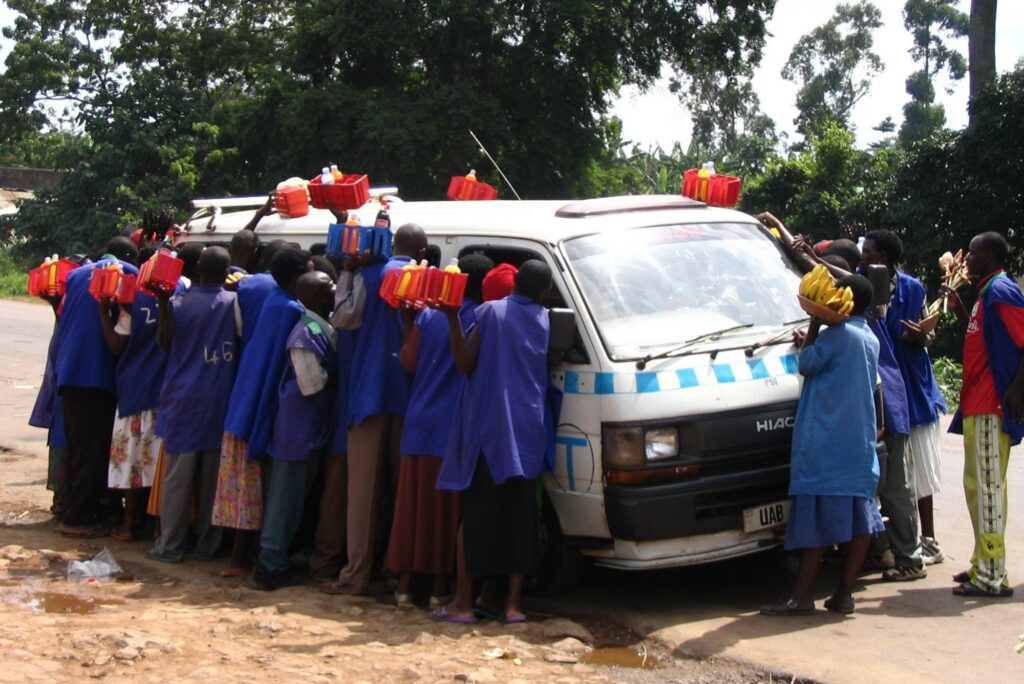
I really didn’t believe my friend when she told me that the best chicken in the world can be bought on the side of the highway between Kampala and Jinja.  She claimed that it not only tasted the best, but it was a fun experience as well.  If you have ever travelled the highway I am talking about through Mabira Forest, you know exactly what I am talking about. 

All you need to do is pull your vehicle over to the side of the road and you will very quickly be surrounded by people dressed in blue aprons with numbers on them.  They will be carrying a variety of items from water, fanta, soda, ngonga (roasted banana wrapped in newspaper), meat on a stick, bananas and the famous chicken on a stick.

The best part about this experience is watching the vendors.  They will surround a matatu or vehicle but if they don’t make a sale in the first few minutes, they will leave.  But if another vehicle pulls up, they will dash to that one hoping to be at the window of a person hoping to buy their product.  The best is when a bus pulls up.  I don’t think I have ever seen people drop what they are doing to chase down customers on a bus as fast as “the blue apron” people.  They can barely reach the windows to sell their product, but they manage as best as they can.  
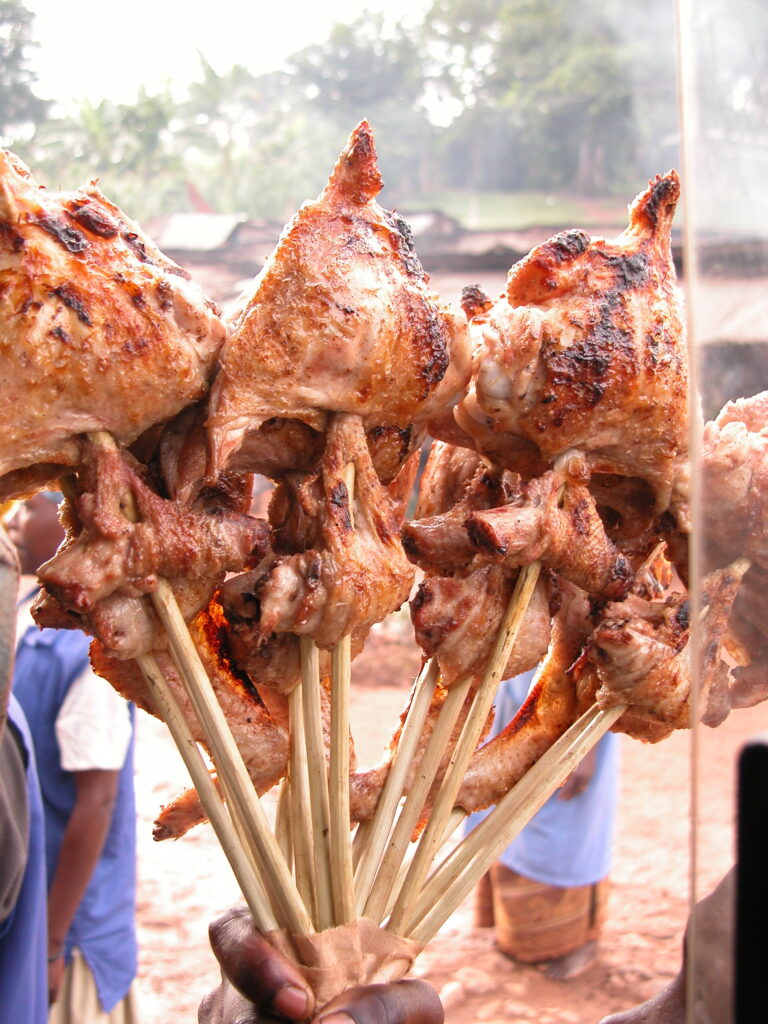
Now as I said, the chicken on a stick is the best in the world.  Why? you ask.  Well, it’s salty, perfectly roasted and a little crispy.  But eating it in the back of a matatu when you are sweaty and squished is the best part.  The windows are down, as you barrel down the highway, and every single bite makes the dangerous drive on this highway way more worth it.  For me, I know that if I end up in a head on collision with another vehicle because my taxi driver was passing a sugar cane truck and another matatu side by side, I will have had the best meal ever as my last.  

HIV Vaccine in Sight

New HIV vaccine could expose latent virus and kill it!

Antiretroviral therapy may soon be obsolete, as scientists have successfully used immune cells to kick the dormant form of HIV out of its hiding place and destroy it. The findings may soon lead to an HIV vaccine. 

Antiretroviral therapy can keep HIV in check so well that the virus is near-undetectable in the blood. However, HIV continues to “live” in latent form, so people with it must keep taking the medications to prevent it from flaring up.

Antiretroviral therapy can have a host of side effects. These may include gastrointestinal problems, cardiovascular problems, insulin resistance, and bleeding events, as well as effects on bone density, liver health, and neurological and psychiatric health.

So, the search for an HIV cure is ongoing. Now, new research may have found a way to “drag” the virus out of its hiding place and neutralize it. The findings may lead to a vaccine that would allow people living with HIV to stop taking antiretroviral medication every day. (Medical News Today 04/09/2019)

Senior study author Robbie Mailliard, Ph.D. — an assistant professor of infectious diseases and microbiology at the University of Pittsburgh Graduate School of Public Health in Pennsylvania — and colleagues have published their findings in the journal EBioMedicine.

Read More East Africa News

Why Build a Hall?

This week the world watched as the Notre Dame Cathedral in Paris, France, caught fire. Part of her centuries-old structure was destroyed, and her grand spire burned away. 

Notre Dame Cathedral

Historian Yvonne Seale writes at vox.com:

Notre Dame de Paris was never the preferred cathedral of kings. Notre Dame was instead the cathedral of ordinary Parisians. Since the Middle Ages, it’s been the backdrop against which the city’s inhabitants have lived their lives. The building, which stands on a small island in the Seine River, was a constant amid the upheaval of the French Revolution and the terrors of the Nazi occupation. As one 14th century scholar wrote, the cathedral was “like the sun among stars.”

There’s been a church on the site now occupied by Notre Dame since at least the sixth century. In 1163, Bishop Maurice de Sully launched an ambitious project to build a new cathedral for the city’s growing population.  For centuries, the cathedral has been a tourist draw, a meeting spot, a place of refuge in times of crisis. It fostered both the beginnings of the University of Paris and, quite literally, the city’s abandoned children in the orphan home it ran.

“It’s just a building,” some say. “It can be rebuilt.” This is true. However, people bond with places. And the longer a building exists, the more memories are housed there and in the people who make it part of their lives.  The cathedral has stood for centuries as a symbol of beauty, help, and refuge.  Sometimes a building matters.

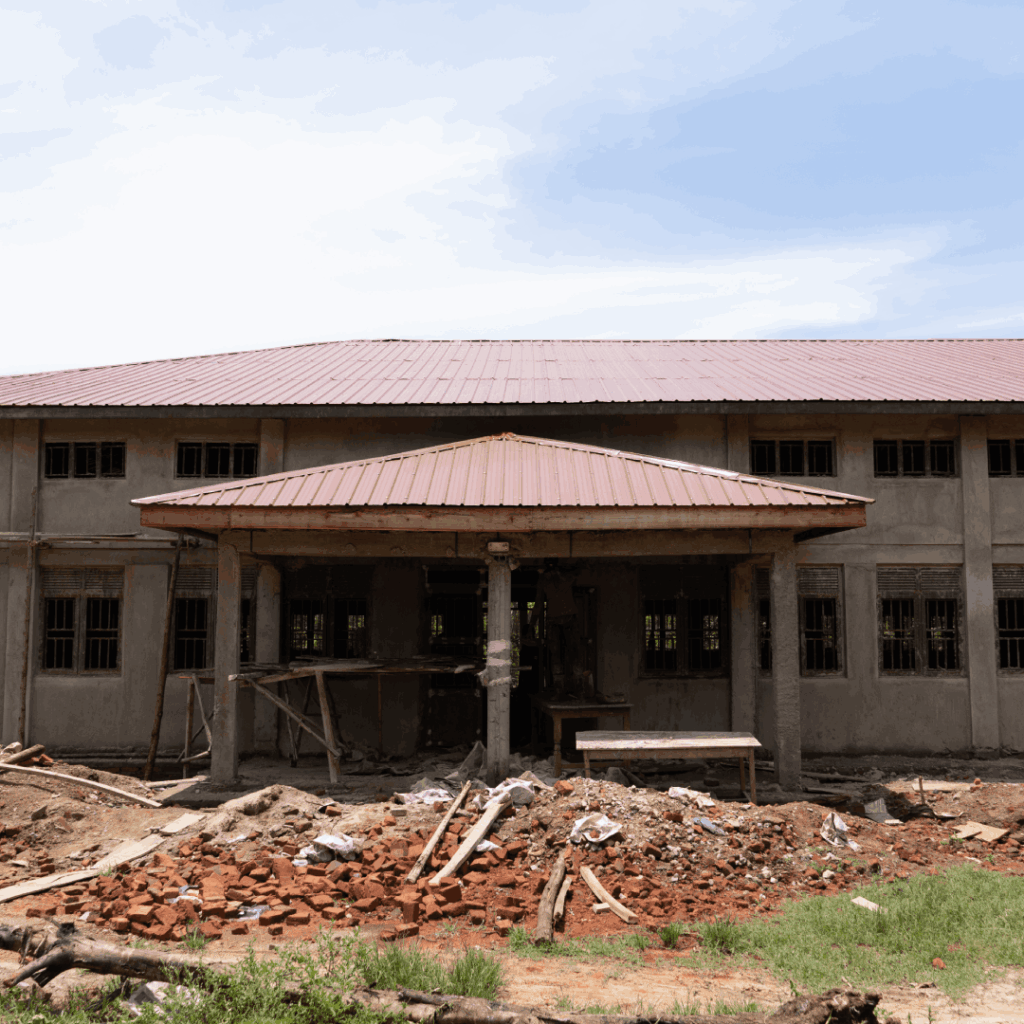
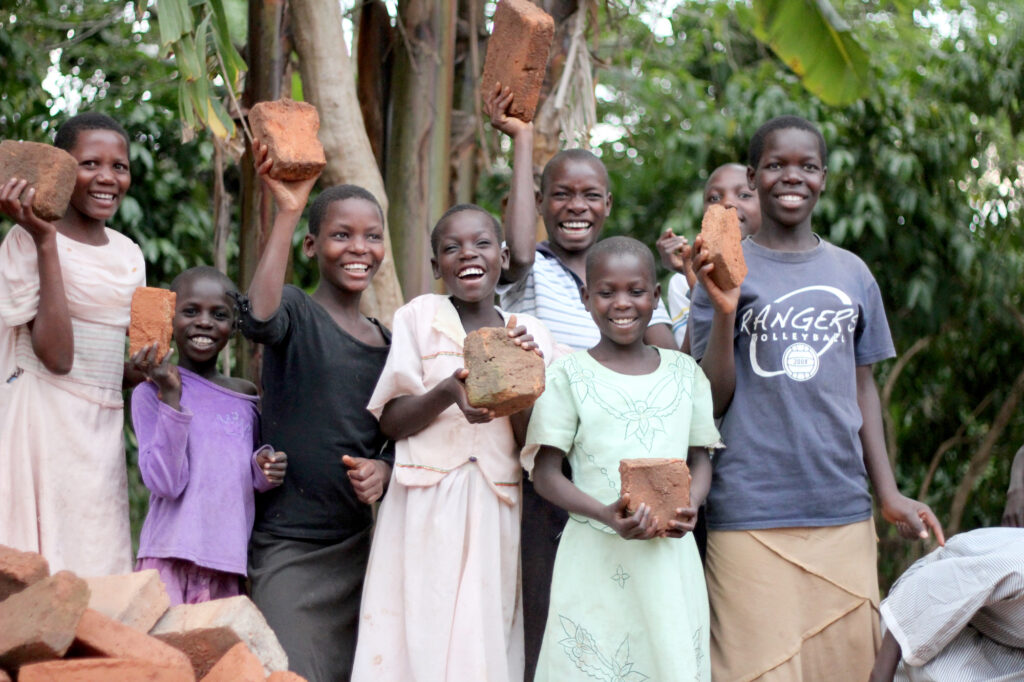
ROWAN is building a Hall of Hope.  Why build a hall?  Ten years ago ROWAN began under the Ugandan trees.  Most organizations start up and fairly quickly look for a building.  Widows and orphans began gathering with ROWAN staff under the trees, in harsh weather, rain or shine, with no thoughts of a building.  But God began to bring more women and children to ROWAN and ten years later the family is overflowing!  The Hall of Hope will have two large classrooms for tutoring, literacy, Bible studies, tailoring, jewelry-making, and much more. There will be additional office space; most of us know the value of a desk or table to work from.  What might be most exciting though is that the Hall holds 600 people and will be able to house the entire ROWAN family, at once. The ROWAN family has never had a place where they can all gather together.  In the past, it was difficult to even get people to come on the property, as the word AIDS is in our name. The shame and stigma are high.  But God lovingly brought dignity to those who came, and more came, and it became clear it was time to give them a place, a beautiful building, their “sun among stars”.  They can look at their Hall of Hope now and think, “WOW, that is for me.” People will pass by and see who this beauty is for.

We know that Notre Dame began as a place for ordinary Parisians to worship God.  “If anyone is worth a beautiful building, let it be the widows and orphans. ROWAN is their family and the Hall is our family room.”— Co-founder Kelsey Hargadine

The Hall of Hope will be dedicated on May 26, 2019.

Help Furnish the Hall

Tourist Freed Unharmed

An American tourist and her unarmed tour guide were kidnapped on April 2, 2019 inside one of Uganda’s national game-parks.  Both were freed unharmed just inside the Congo border after five days of captivity; according to the Uganda Police Force and the Uganda Wildlife Authority.  Both agencies report this to be an isolated incident, where recommended security protocols were neglected by the victims.  (for additional information refer to Uganda Police Force Information Resource Center @ upf.go.ug).

What can we learn from this?

International security measures remain the same, regardless of the country and may vary depending on the venue.  Always adhere to safety recommendations of the governing authorities. These will usually include:  1.) never venture alone 2.) avoid isolated areas 3.) travel during day light hours 4.) avoid carrying valuables and 5.) awareness of surrounding areas. 

Read More East Africa News

ROWAN Campaigns – New Uniforms

We truly enjoy writing about life in Uganda & offering as many details as we can about the people ROWAN helps. We try not to plug our own services very often, but maybe we should. Although we are happy to simply have you as a reader, we would also love for you to get involved with what goes on at ROWAN. A more rewarding experience you will never have.

The Gift of Clean Clothing

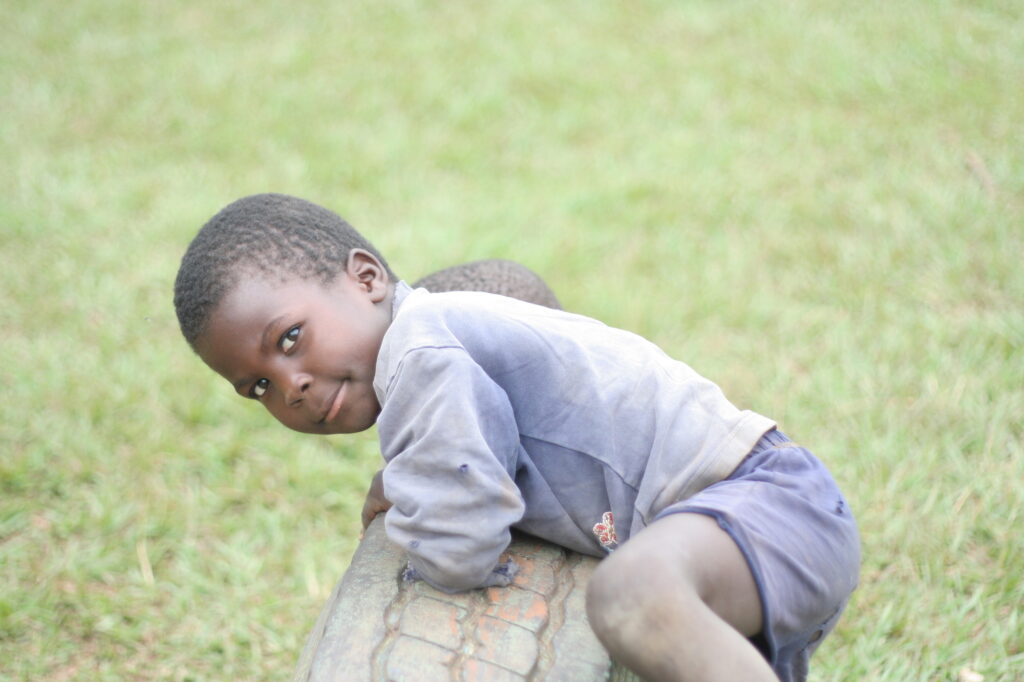
As you can see by this rambunctious one, it’s time for new uniforms. Not just for the children, but for our widows & staff as well. With the new opening of the Hall of Hope, we want everyone to have something colorful & fun!

What You Can Do

If you want to get involved & help us provide new uniforms for our community, you can. It’s easy. Just a $20 dollar donation will provide a new uniform with shoes for a child or a quality shirt for a widow or staff member. That’s less than lunch! Imagine that, by eating at home one day you can help clothe people who need it.

Getting Dressed

As of publishing we haven’t raised much for this campaign, but it’s just getting started. Once we have our uniforms, we will definitely share pics! If you’d like to get involved we would absolutely love to have you.

ROWAN Campaigns – Education boost

We have a great time sharing about life in Uganda & providing as many details as we can about the people of ROWAN. We try not to plug our own services very often, but maybe we should. Of course we are content to simply have you as a reader, but we would also love for you to get involved with what goes on at ROWAN. A more rewarding experience you might never have.

The Gift of Education

This year we have several students graduating primary level schools & joining our secondary/higher level education. We are incredibly proud of each & every one of them! As the children move up through their education this also increases our budgetary needs. A large portion of our donations go towards education, as it is a cornerstone to creating a better life.

What You Can Do

With your help ROWAN supports over 55 students in good schools getting a proper education. Of everything you donate, at least a portion of all of it goes directly towards sponsorship for school. Anything you can spare is welcome & makes a difference.

Breakdown

Below is a breakdown of some of our education related costs, even $25 can make a young students life better & their schooling easier!

$25 = Books for 1 student for the entire year
$50 = Final exam costs for 5 students
$100 = Costs for a student for 1 trimester of boarding school
$400 = Costs for a student to go to school for an entire year

Moving Up in the World

As of writing this we are just over halfway to our goal for this campaign & we would absolutely love to make this post out-of-date super quick! There will always been children who need an education. If you’d like to get involved we would absolutely love to have you.

Do Good?

People are often motivated by good intentions. Christians can be doubly-motivated by good intentions and a nudge or call from God. Wonderful things can happen when intentions are good.

“There is nothing so useless as doing efficiently that which should not be done at all.”—Peter Drucker, world-renowned author, educator and management consult who was driven by a desire to build effective and responsible institutions

Whoa.  Read again, what Peter Drucker said:

“There is nothing so useless as doing efficiently that which should not be done at all.”

What happens when we rush to do good and the result is not so great? ROWAN co-founder Kelsey Hargadine tells a story about something that happened in Haiti and has happened in many mission settings. Kelsey shared that, when westerners travel to areas of need, we step out of the van into the village and immediately see the torn clothes, no shoes, poor housing, etc. We quickly want to bring tons of clothes, shoes, and material things that can help that tangible image of poverty. That is exactly what we shouldn’t do. One time a group of people brought hundreds and hundreds of shoes to Haiti. They gave all the shoes out and felt so good for doing that. What they didn’t think about was the shoe seller in the village trying to make a living, and just putting him out of a job. They didn’t think about how a small child having a new pair of shoes puts them at risk of theft and abuse. We don’t like thinking about those things, but they are what we need to remember above all.

This is why the ministry of ROWAN works, because they don’t rush in.  Rushing in with good intentions is perfectly understandable, but it may not be the best way to make lasting change. This doesn’t mean we don’t do anything, and sometimes needs are immediate. But in all those situations, ROWAN works because ROWAN IS:

~Widows and orphans as leaders in their own communities, creating and sustaining their lives with support from the village leaders

~Pastor Paul and ROWAN leaders discussing, listening, and deciding what to do. They are the drivers.

While we as supporters may be bursting with ideas and heartfelt emotion, it is our job to work alongside and empower those whose home is the village.  It is our job to trust God and seek His patient, faithful guidance in partnership on their behalf. Peter Drucker says:

“Follow effective action with quiet reflection. From the quiet reflection will come even more effective action.”

Co-founders Pastor Paul and Kelsey

ROWAN does this so well. They aren’t perfect at it and they make mistakes, but there is grace and forgiveness and learning during those times.  And for the most part there is effective action when Pastor Paul and Kelsey and you and I trust God together and commit to see people’s lives changed for good. And in the village there is so much happening that is good.

“Let them praise the name of God— it’s the only Name worth praising. His radiance exceeds anything in earth and sky; he’s built a monument—his very own people!” Psalm 148:13

What is a Village?

ROWAN partners with over 30 villages in Uganda, with their main office at the village in Mawanga. Everyone knows the word “village”. We’ve all heard, “It takes a village to raise a child…”. Many a town in England boast a village green; a pleasant, common green space in the town center. There’s the East Village in New York City, a hip, happening neighborhood—the Village People probably started there!

According to Wikipedia and it’s sources, “…a VILLAGE is a clustered human settlement or community, larger than a hamlet but smaller than a town. Villages are often located in rural areas and are normally permanent, with fixed dwellings. The dwellings of a village are fairly close to one another, not scattered broadly over the landscape. Although many patterns of village life have existed, the typical village is often small, consisting of perhaps 5 to 30 families. Historically homes were situated together for sociability and defence, and land surrounding the living quarters was farmed.” 

This seems like a pretty accurate description. And with ROWAN, the village—the clustered human settlement with fixed dwellings and farming—is also a family.  As I mentioned in a previous post, our son Jake served with ROWAN on a college student team in the summer of 2014. As Jake made preparations to go, I helped where I could. I took him to get some whopper shots. We bought village supplies at Target. We prayed over him more than once. When we took him to the airport and as he hugged his younger brother goodbye, my husband and I felt a peace and excitement for Jake. But I also felt something else. This is what we’re supposed to do, right? Send them out into the world?! Then I remembered what author and teacher Elizabeth Stone said about having a child; to do so is to decide forever to have your heart go walking around outside your body. Okay, THAT’S why I had a lump in my throat the size of the sun. These feelings are the stuff of love.

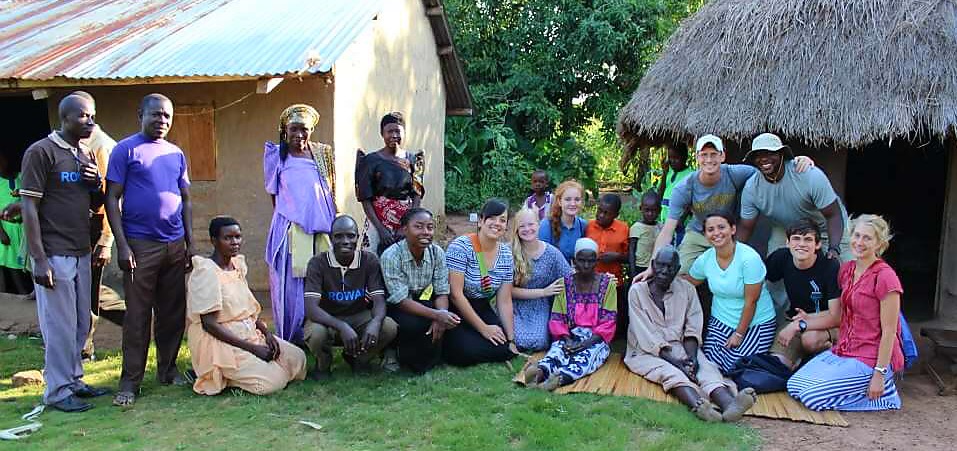
Visiting in the village.

So he went. And when he returned he was changed. He was still Jake for sure, but he had met God there in Uganda in a new and different way, and he was also part of another family. We asked if we could also join that family and soon after we began our first ROWAN sponsorship with a wonderful young man named Cyrus. Part of what God taught me through Jake’s first journey to Africa (uhhhh yes, there were more—the die was cast!) was that there are mothers in the village, who have lost their hearts that were walking outside their bodies. And children who have lost their mothers and fathers. And despite our distance and differences, I feel a kinship with these village mothers. Through unimaginable pain they rely on and love Jesus and because of Him they have the light of the world in them. Their hope and joy is unique.

Amaka

We are humbly learning from our village Amaka—it means family in Uganda—about the vast and intimate love of Jesus. Would you like to join us

Jackfruit – The Fruit That Brings People Together

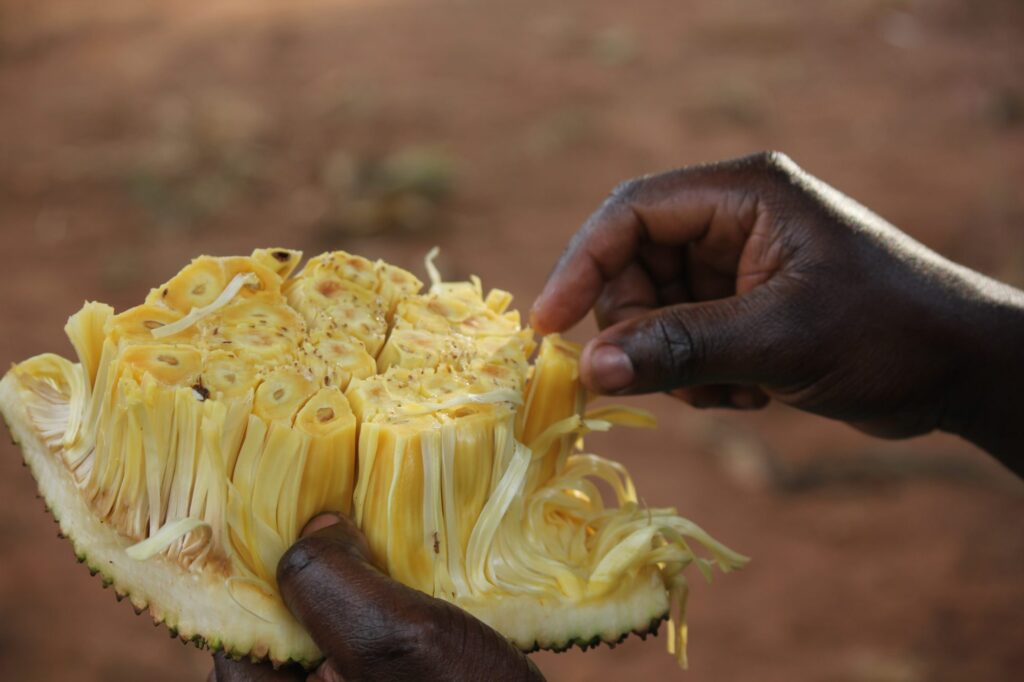
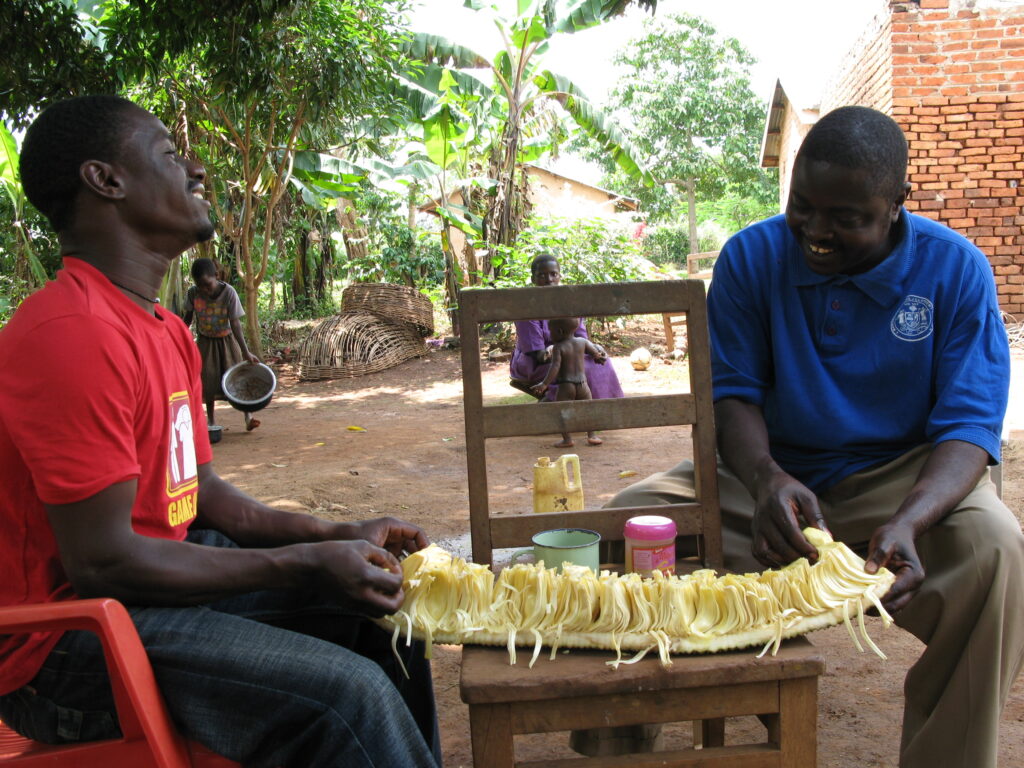
You can’t really visit Mawanga and Pastor Paul’s home without experiencing the fruit that the village produces. Whether it is mangos, passionfruit, pineapple or watermelon, you will experience the best tasting fruit you’ve ever had.  But no other fruit takes the time and energy than that of a jackfruit or known as ffene in Uganda. A jackfruit is a social affair that isn’t as simple as just cutting it up and eating it.

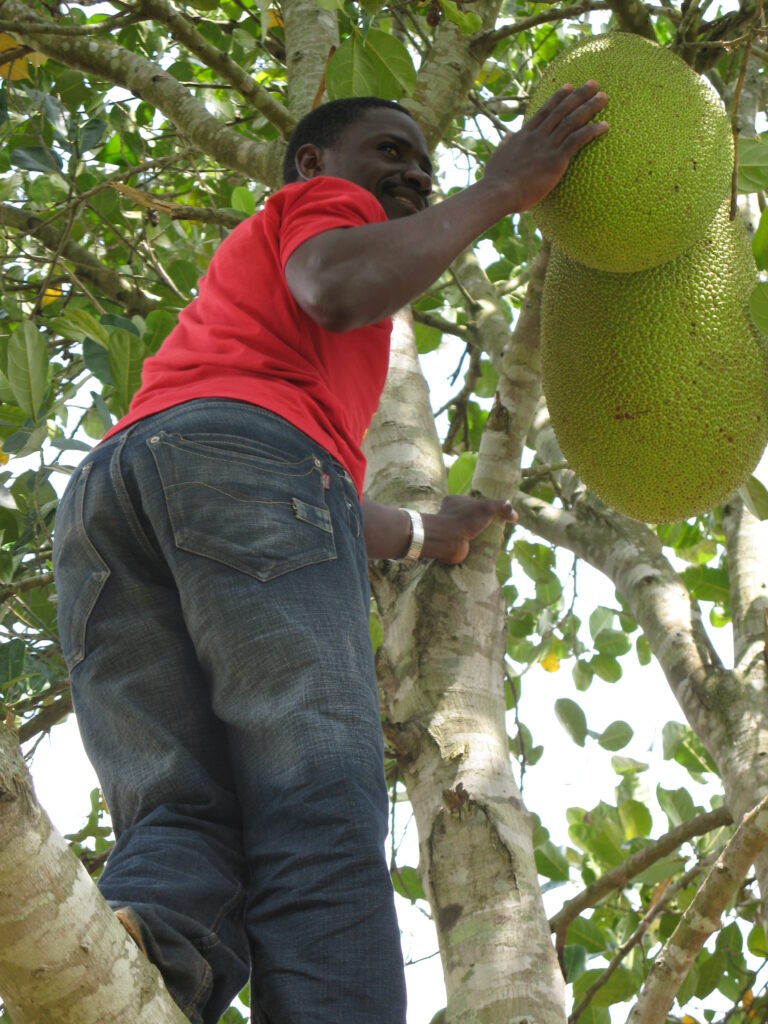
My husband looking for the perfect jackfruit

First you have to climb to the top of the tree to get to the big ones to see if they sound hallow. I was once told that a good jackfruit makes the same sound as your hand hitting your stomach. Once you have chosen the perfect jackfruit, you will need a good sharp panga (knife) to cut it down.

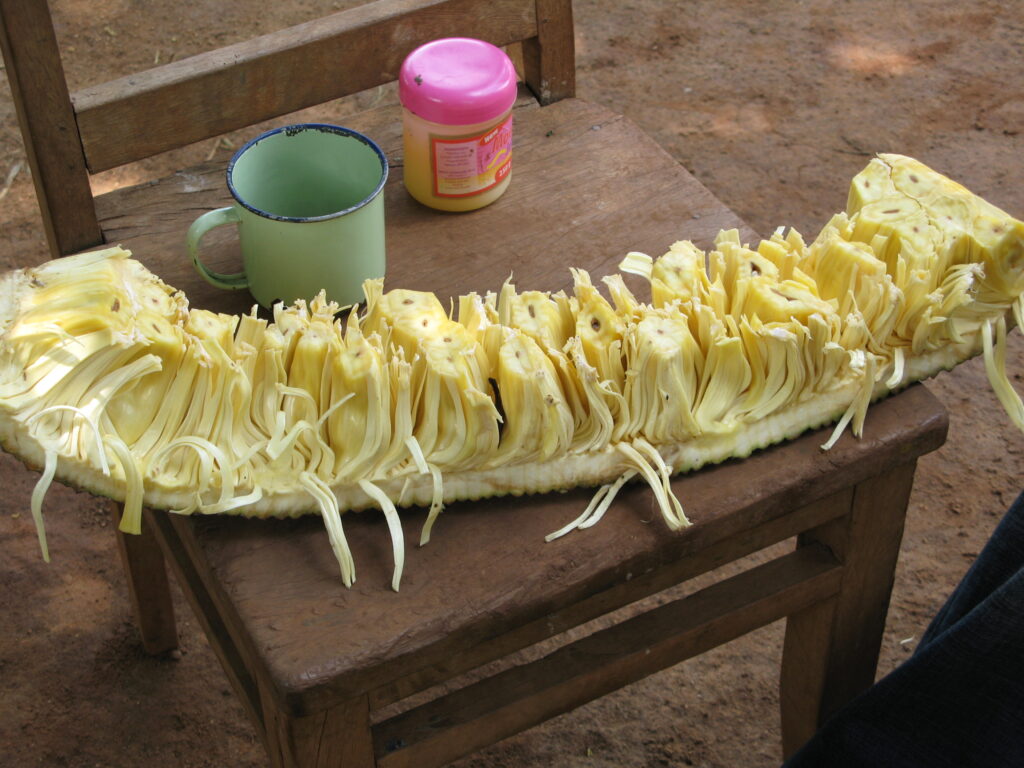
All prepped and ready to enjoy

Make sure you don’t forget the vaseline or cooking oil on your hands before breaking into a jackfruit to keep the stickiness off your hands. Forget about the interesting smell it gives off and just enjoy the massive amount of fruit it produces.  

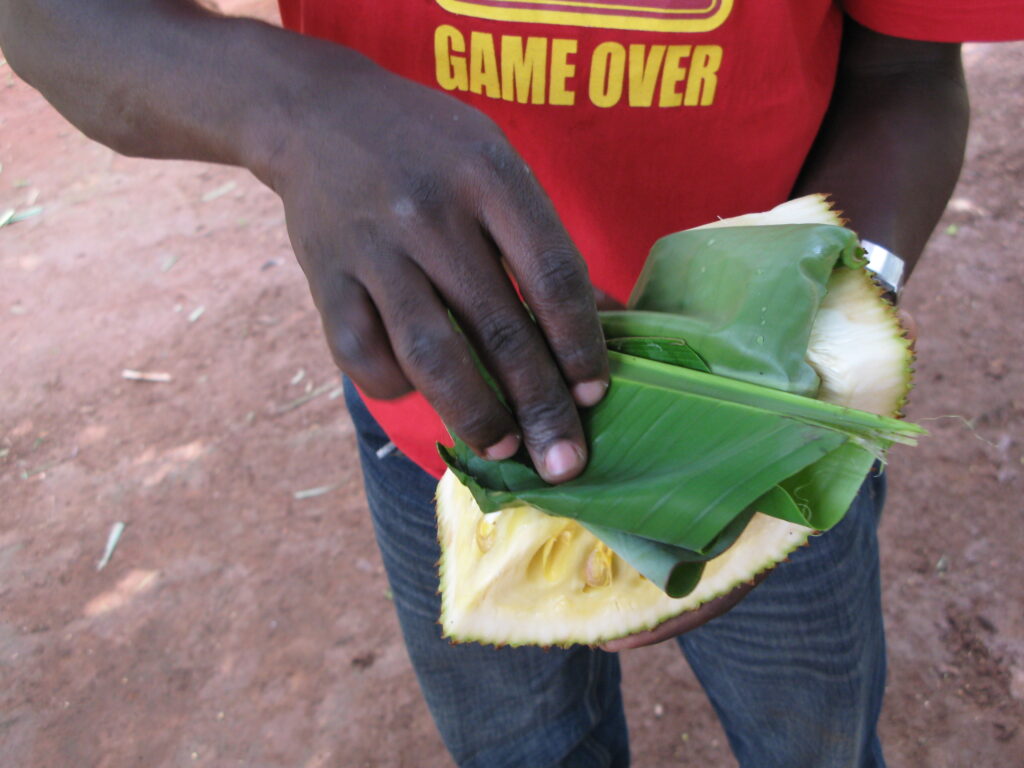
Wiping away the sticky from inside with a banana leaf

Now jackfruit can range in size and weight. They can be anywhere from 10-30kgs and quite large.  Which is why they are commonly shared among many people sitting in the shade under a tree. 

Sharing stories and jackfruit

The people of Uganda love jackfruit. My husband misses it so much he almost spent a hefty amount on one that we found in a store here in Canada. Thankfully he decided that $120+ is too much for a fruit that costs so much less in Uganda, and free in the villages if you have jackfruit trees around. 

If you have never tried jackfruit, you owe it to yourself to volunteer and visit Mawanga to really experience this fruit that brings people together.

Uganda/Rwanda Tension on the Rise

For months Rwanda President Paul Kagame has accused Ugandan President Yoweri Museveni of “supporting anti-Rwanda rebels” operating in that country; an accusation Uganda adamantly denies. 

Causing Hardship

As a result of the tension, Rwanda has blocked Ugandan commercial exports en route to sea ports in Kenya, creating a trade embargo and ultimately a financial hardship for Ugandans.

Read More East Africa News